
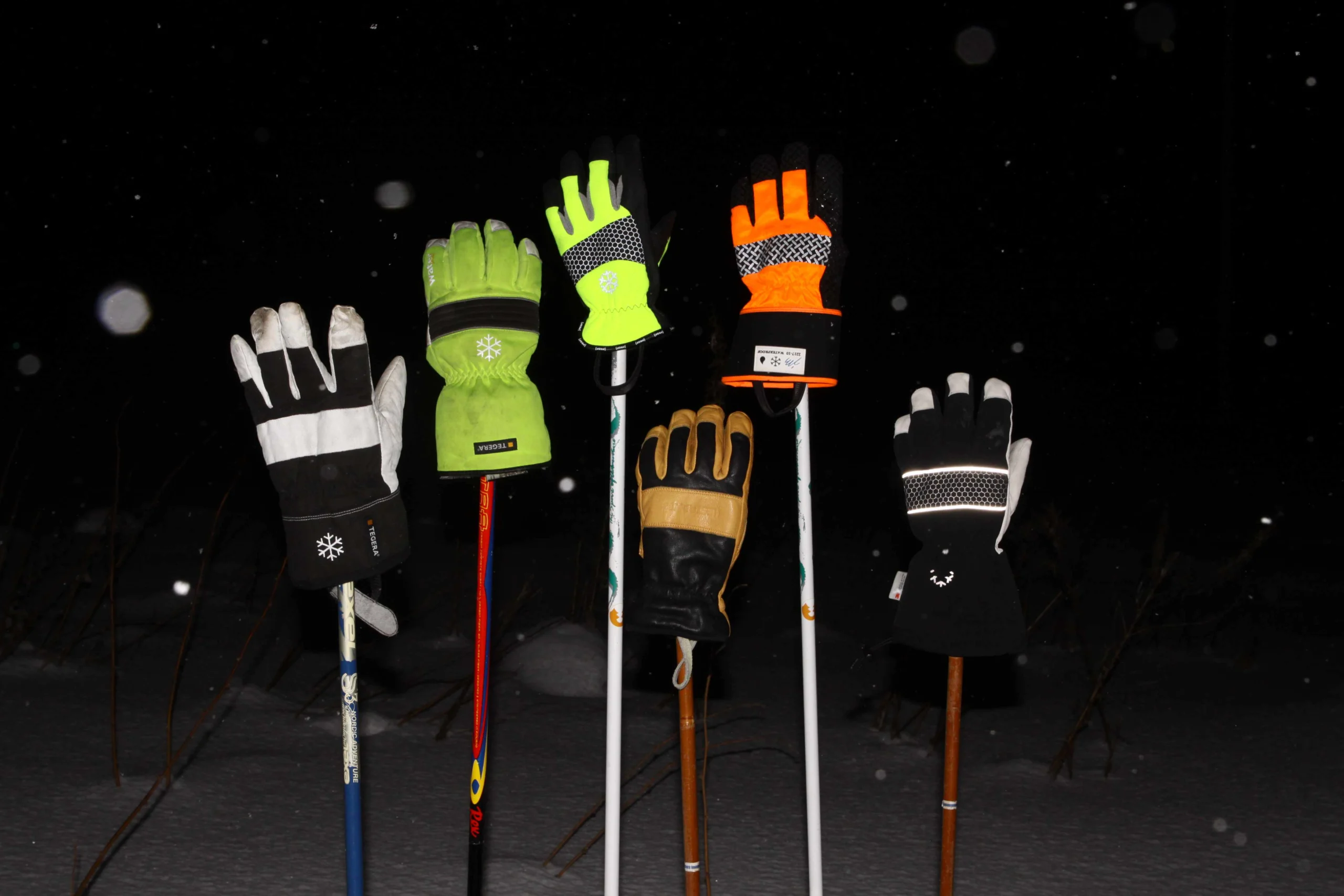
Hundred-euro mittens from an outdoor shop or ten-euro gloves from a hardware store? Work gloves designed for winter use protect fingers from the cold, whether you’re a recreational hiker or a laborer. Cheap work gloves are especially well-suited for rough use.
More expensive winter gloves can cost over two hundred euros. While their fit and warmth are top-class, you rarely dare use them outside ski slopes. When spending a week camping in the wilderness by the fire, clearing ice from a snowmobile track, or working with ropes gloves inevitably wear out quite fast.
When a pair of gloves costs around twenty euros, you don’t have to handle hot pots nervously, nor worry whether skiing pole strap will chafe the your glove.
We didn’t test flagship models from workwear brands but stayed in the price range of basic gloves costing around twenty euros. The cheapest pair tested cost under eight euros.
The goal was to find versatile gloves suitable for general winter use, so latex foam-coated gloves were excluded, even though some consider them useful for tasks like building snow shelters.
Keeping fingers warm
Warmth depends not only on insulation quantity but also its placement. A glove thickly padded all around may still feel cold if the insulation bunches up and restricts circulation. Interestingly, many test gloves started to feel warmer over time as initially snug linings compressed slightly with use.
Thinner insulation on the palm improves dexterity but gets cold quickly when handling metal objects or even just gripping ski poles in very cold weather.
To keep fingers warm, it’s also worth considering the materials of frequently handled tools, poles, shovels, and knives.
One weakness in many work gloves compared to outdoor-specific gloves was wrist protection. Only has a drawstring on the cuff. Many models have cuffs that are too short. A proper cuff significantly reduces heat loss at the wrist and thus helps to keep also fingers warmer.
A thin, snug cuff fits more easily under jacket sleeves, but many short-cuff gloves are too loose to fit easily under a jacket sleeve. With thick winter gloves, it’s often more practical if the cuff goes over the sleeve. Wrist tightening improves fit but slows putting gloves on and taking them off.
Fleece pile lining protects the wrist better than smooth materials.
For outdoor use, gloves should ideally tolerate heat. In winter, when water is melted from snow and more time is spent near stoves or fires, this becomes especially important. Many work gloves have leather palms, which handle heat well. Synthetic leather and rubber surfaces are much more heat-sensitive.
Lining thickness also matters: thicker lining protects against both cold and heat. Sometimes heat transferred quickly to the fingers even when the outer leather showed no damage.
Some gloves have leather palms and reinforced fingertips, with synthetic fabric on the sides of the fingers. Around campfires, this difference is obvious: leather remains intact while fabric areas suffer damage from heat.

Getting an eager sled dog team ready for a run requires dexterity and good grip.
Keeping fingers dry
Some gloves have a waterproof membrane between the outer fabric and lining. In practice, this offers little benefit. If a glove becomes soaked from the outside, fingers get cold even if the inner lining stays dry. Membranes slow down drying and can cause sweating during active movement.
If a wet glove freezes in subzero conditions, it may become impossible to put on. Then the only options are drying them indoors or by a proper fire or when this is not possible, stuffing them inside your jacket. Which is not always the nicest option.
On winter trips, gloves usually get wet from snow rather than liquid water. Snow melts from body heat during tasks like digging a campsite. Unless ice fishing, building snow shelters, or ice climbing, wet gloves are not typically the main issue.
However waterproof gloves can help prevent burns if hot water spills while filling thermoses. So it’s wise to keep gloves on during that task.
Despite thorough searching, I haven’t found work gloves in this price range with removable liners in Finnish hardware or workwear stores, although mittens often have them. Probably separate inner and outer gloves are just not cost-effective to produce.
Surprisingly few outdoor glove models have them in general. It seems that most work gloves are designed for conditions where they can dry overnight. For people spending prolonged periods outdoors or have limited time for recovery and maintenance indoors, removable liners would make field drying easier.
Rubber-coated gloves tolerate prolonged wet handling better. Well-greased leather stays flexible and handles moisture reasonably well, though drying must be done carefully. Especially near fire, where leather can harden. As the old Finnish saying goes: “Where butter melt, leather burns.”

Fluffy fleece pile inside the sleeve blocks the draft and keeps the wrist warmer than a smooth fabric. In very snowy conditions drawstring at the end of the cuff is useful. I have found myself using it wery little.
Keeping fingers functional
In very cold or windy conditions, gloves must still allow enough dexterity. Good gloves are crucial in strong wind, where even brief exposure of bare fingers can impair function and touch.
Tasks like using normal sized tools, starting fire with a ferro rod, and writing with a pencil should be possible with gloves. Still, there is clear differences not explained solely by glove size.
For example, the some of the bulkiest-looking gloves are surprisingly dexterous due to soft leather and a loose lining, making them more tactile than tighter rubber-coated gloves.
However, thick gloves are always thick – for example adjusting an ultralight gas stove still requires removing them.
Leather palms provide better grip and feel than rubber. Surprisingly, leather also offered better grip overall, likely due to flexibility. Rubber grips well when dry but less so when wet or especially snowy, whereas leather grip improves slightly with moisture.
When pulling a sled in deep snow, body heat allows the use of relatively thin gloves. If more protection is needed, mittens are usually more comfortable choice. Thick work gloves also often fit loosely, making them tight to fit the ski pole straps or bike breaks.
The same applies to thick finger gloves in general. They’re often so clumsy that there’s little difference compared to mittens, which keep fingers warmer.
Some gloves have padded palms, but this is mostly a drawback, making grabbing things less comfortable. It might add some insulation against metal tools though.
Some models included reflectors. While not essential alone in the wilderness, a reflective glove dropped near a trail is easier to spot in headlamp light and can aid visibility in emergencies.
Conclusion
Can work gloves compete with more expensive winter outdoor gloves? In terms of price, easily. For the cost of one premium pair, you can get ten pairs of good work gloves. Do you sacrifice tenfold in performance, fit, and durability? According to our tests, no.
The biggest compromise is fit. However, well-broken-in leather gloves will mold to the hand over time.
Most work gloves meet the EN388 standard, meaning they provide protection against cuts, abrasion, and punctures – but this doesn’t automatically mean they are more durable than other gloves.
Not all work gloves match high-end outdoor gloves in durability. Materials matter: leather is a reliable choice. High-quality leather work gloves can last a long time. Synthetic gloves vary more widely in quality.
Lower price is also reflected in stitching quality. Seams are often the first to fail.
Along with footwear, gloves are among the most heavily worn outdoor gear. Even expensive gloves wear out with repeated use, damage from knives or fire.
A cut or burn in a new glove feels worse if it cost as much as a multi-fuel stove. If it costs more like an aluminum pot, the frustration is easier to accept.
A hiker who goes on one ski expedition per year might use the same gloves for a decade. Someone active outdoors daily may wear out a pair of quality gloves in a single winter. In that case, work gloves are the more economical choice.
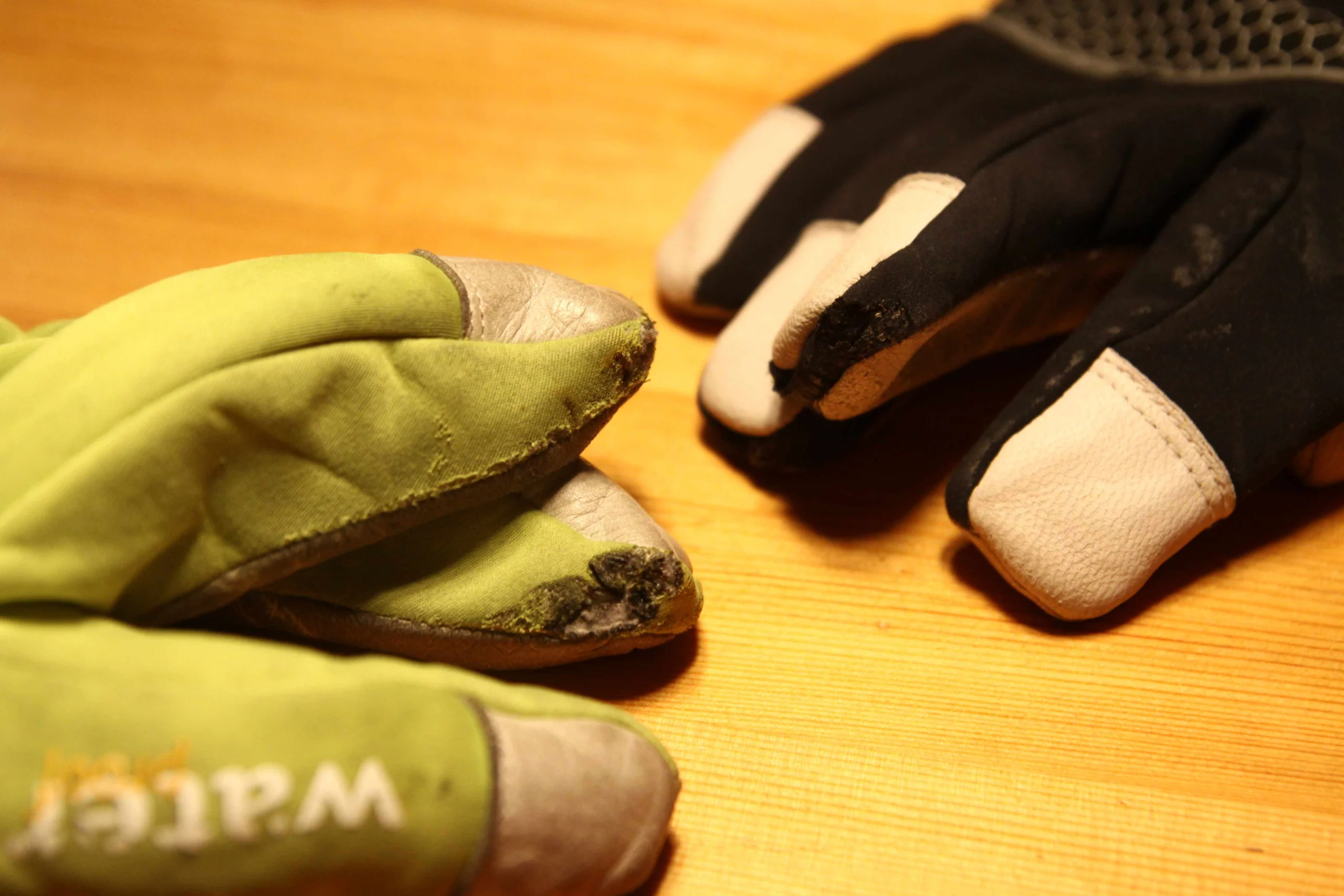
The synthetic side has burnt by the fire while leather shows no trace of it.