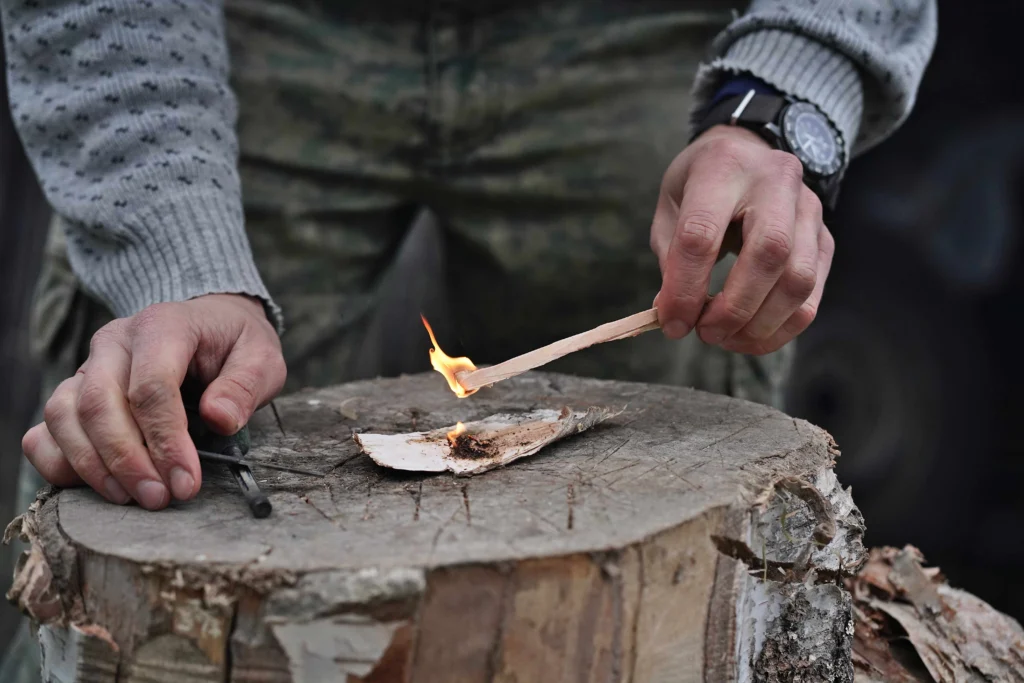
A fire starter rod, ferro rod, fire steel, striker… a this beloved survival tool has many names. The rod is sometimes incorrectly also called a magnesium rod. While ferro rods often contain magnesium, it is cerium that gives them their spark-producing properties.
In addition to cerium and magnesium, the rod contains lanthanum, neodymium, other lanthanides, and iron.
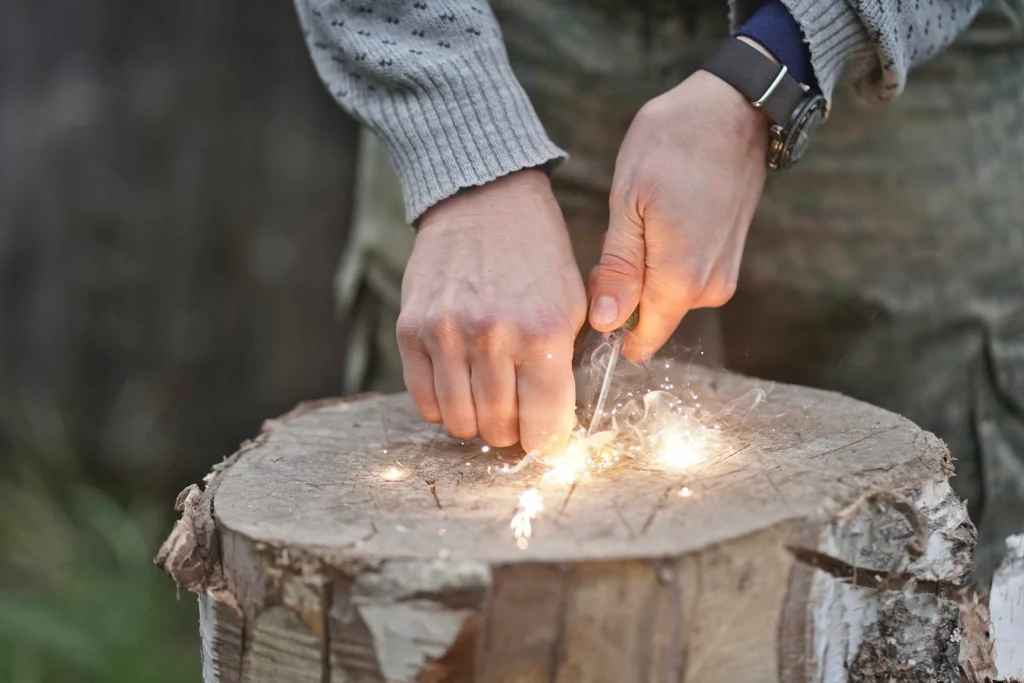
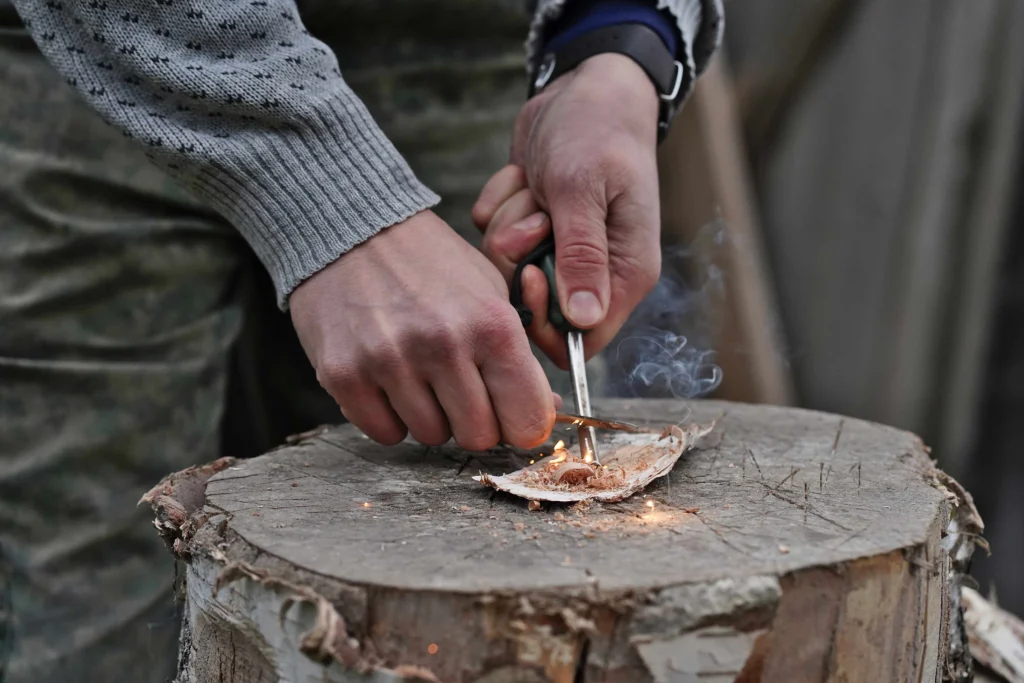
A spark is created when the rod is scraped with a sharp object – most commonly the included striker or the spine of a knife. Scraping exposes the rod’s surface layer to oxygen while generating heat through friction. Ignition is based on cerium’s low ignition temperature, which is below 180°C (356°F). Thanks to the other metals in the the sparks can reach temperatures of up to 3000°C (5430°F).
Two factors determine a ferro rod’s effectiveness: how well the sparks burn and how easily they are produced. Both depend on the alloy composition. Softer rods produce larger, more easily detached sparks but wear down faster. In practice, this is rarely an issue, as even small rods can generate thousands and thousands of sparks.
Size isn’t everything
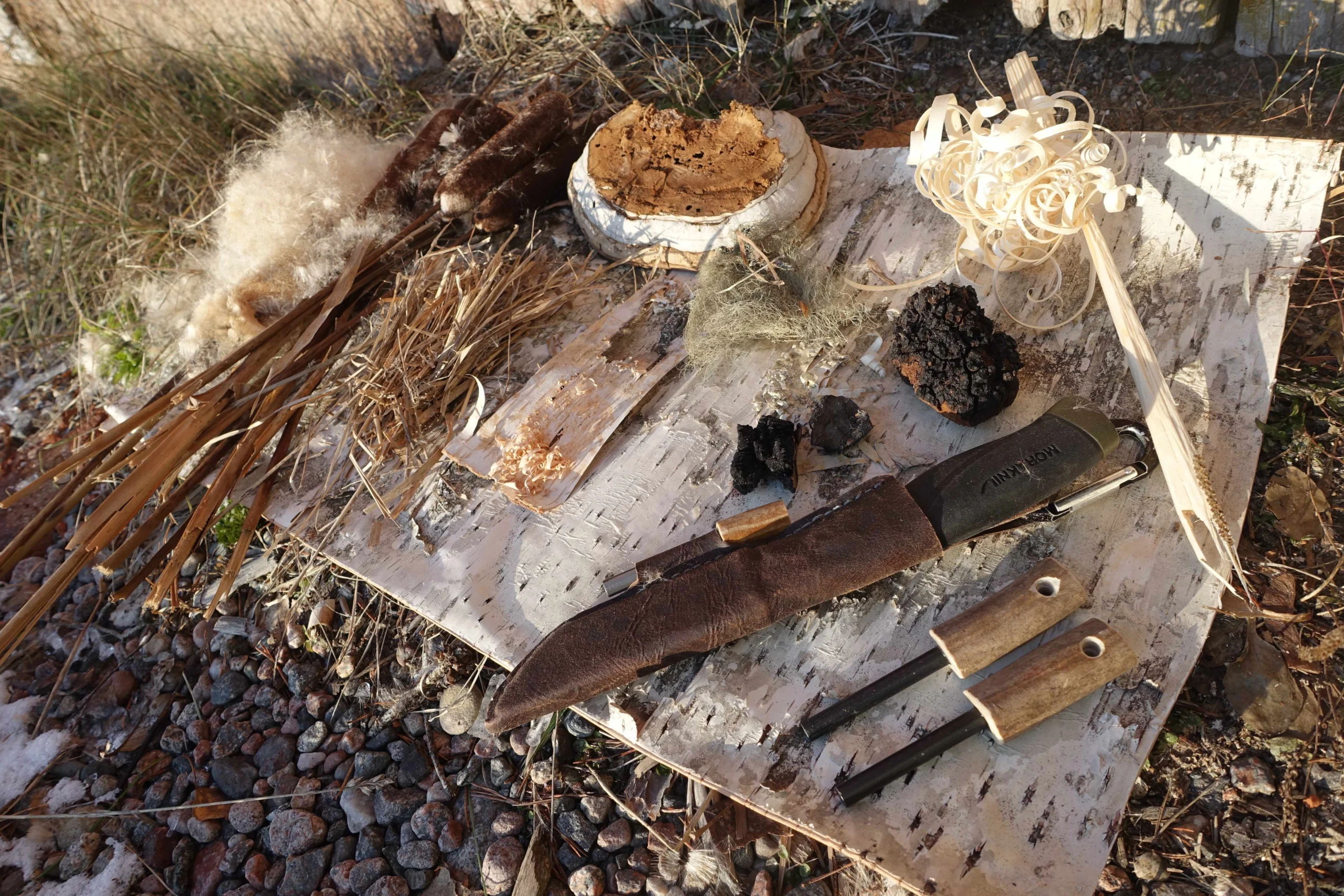
Ferro rods come with a wide variety of handles: from reindeer antler and curly birch to simple plastic grips. Most common nowdays being plastic or biocomposite. Some rods fit into knife handles, others include extras like emergency whistles or tinder compartments. A simple rod without a handle works just as well, provided the technique is correct.
A longer rod and larger handle are easier to grip with gloves in cold weather. Otherwise, larger size offers little advantage. Scraping over a long distance often just scatters sparks unpredictably. While thicker rods last longer, most users don’t need more than a rod roughly the thickness of a pencil and under 10 cm long to last their life in recreational use.
Some survival models include a magnesium block as part of the handle, allowing users to shave off magnesium shavings that burn at extremely high temperatures when ignited.
Nearly all ferro rods are sold with a separate striker, but many budget strikers are frustratingly dull.
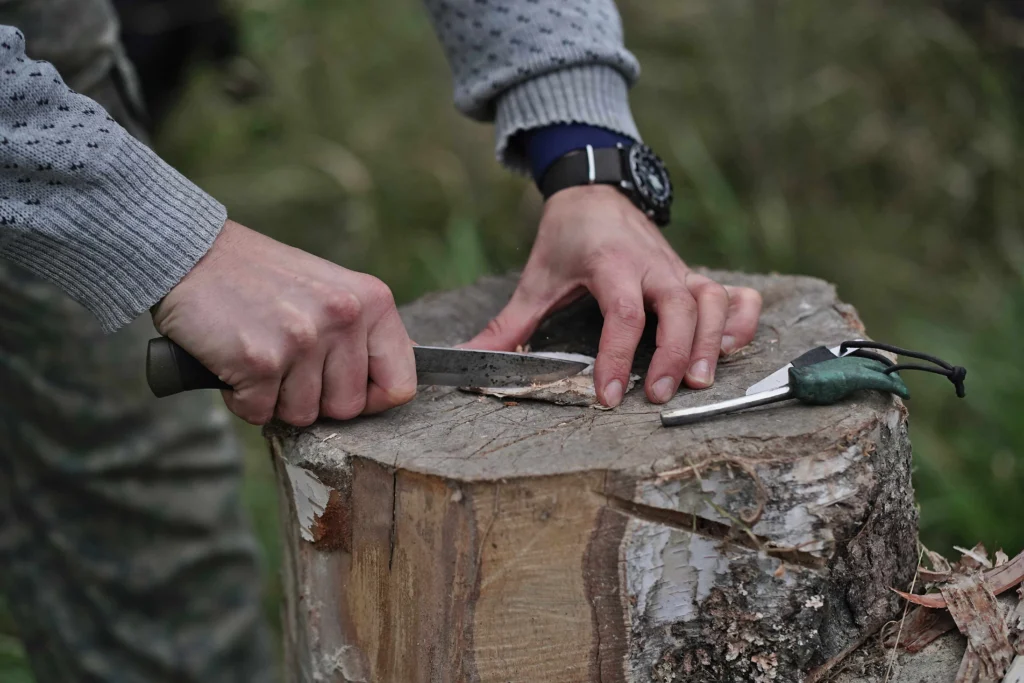
A knife spine works well as a striker, especially if ground to a sharp 90-degree edge with a diamond file. If the spine is rounded and no striker is available, the knife edge can be used. Though this will dull the blade eventually if used continually. A sharp piece of glass or a stone edge will also do.
Fine tinder matters
Unlike the weak spark from traditional flint and steel, ferro rod sparks are so hot that they can ignite almost any properly prepared tinder.
For beginner practice, materials like cotton wool or a pulled-apart tampon work well. Cotton burns longer when mixed with petroleum jelly or hand sanitizer. Whatever material you use, it should be processed into a fine, fluffy structure to maximize surface area for catching sparks.
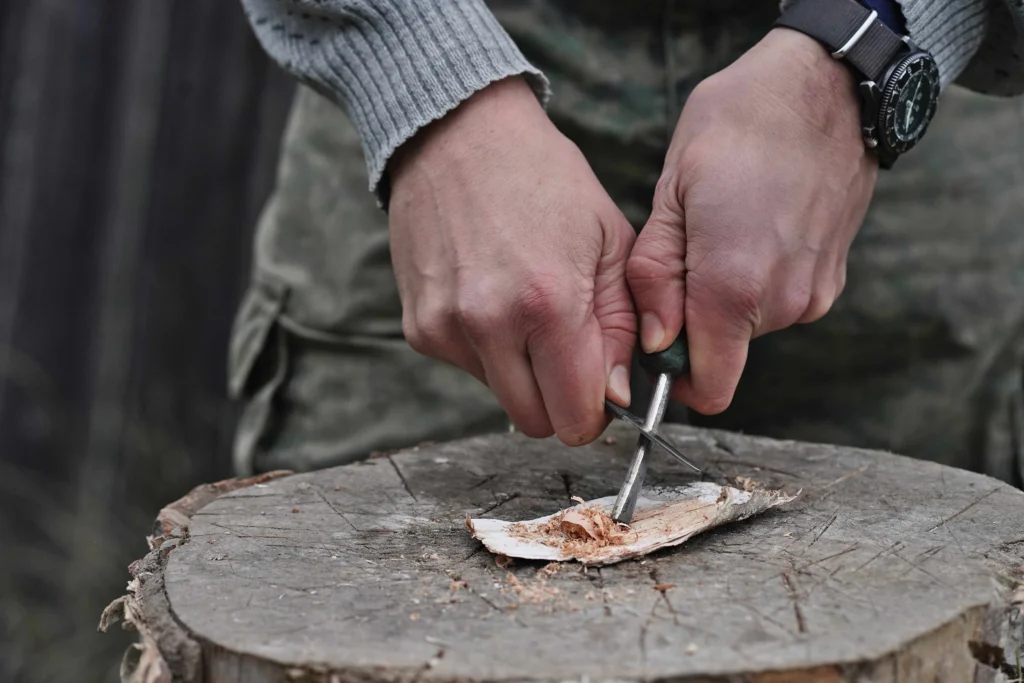
Among natural materials, birch bark is one of the best. Its surface should be scraped into fine dust for reliable ignition. Fresh bark works just as well as dry, thanks to its natural oils. In rainy conditions, peel away the wet outer layers and scrape the dry inner bark.
Other commonly available tinder materials include dry grass, fern leaves, and the fluffy seed heads of cattails and fireweed. These ignite easily but burn quickly, so they should be combined with slower-burning materials. Constantly fluffing them helps sustain the flame.
Lichens like beard lichen can also work but absorb moisture easily. Since they cannot be collected from trees in many regions (by Finnish everyones rights), only ground-found material should be used. It should be dried thoroughly before use.
Dry juniper bark also makes excellent tinder, though collecting it typically requires landowner permission. Like dry grass, it should be rubbed into fine fibers.
Wood shavings and birds nest
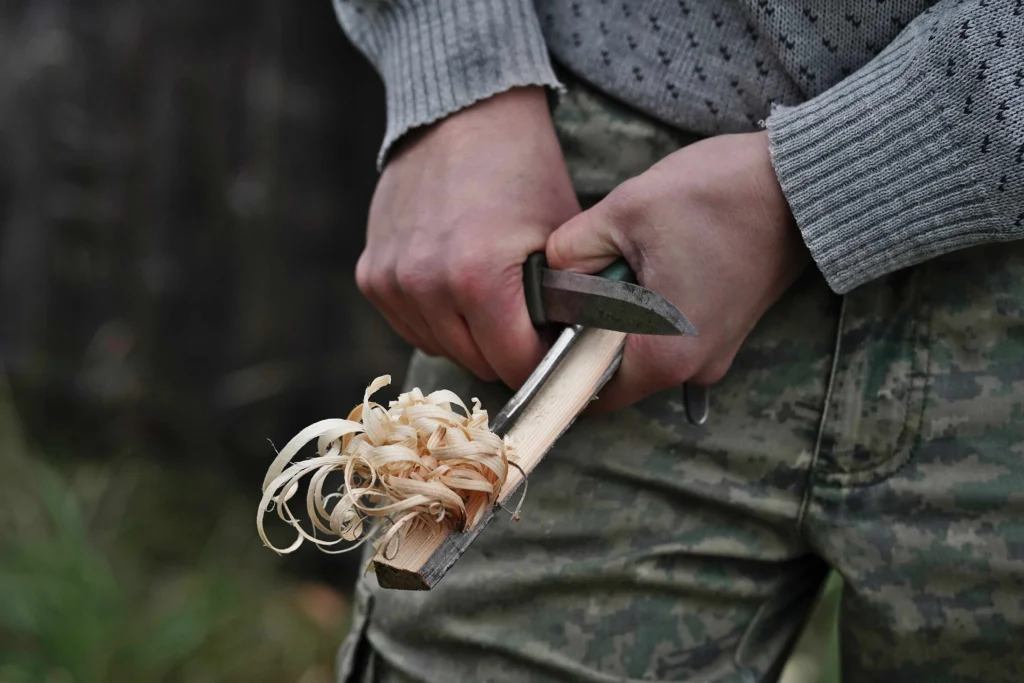
In wet conditions, most tinder materials will be damp. Then it’s best to use fatwood (resin-rich pine), scraping dry shavings from a split branch or root from a fallen tree. These ignite similarly to birch bark scrapings.
Shavings from other woods also work, though not as effectively as fatwood. Very fine feather sticks can also catch sparks.
In these cases, sparks ignite tinder directly into flame. Alternatively, you can first catch a spark as a glowing ember and then blow it into flame – similar to traditional flint-and-steel or friction fire methods.
For example, chaga fungus catches sparks easily and smolders hot for a long time. Tinder fungus behaves similarly. Even a piece of charcoal from a fire pit can be reignited this way.
Once you have a glowing ember, place it in the center of a bird’s-nest-like bundle of dry fibers and blow gently. The ember will expand and eventually ignite into flame with sufficient heat and oxygen.
A ferro rod is also suitable for lighting gas stoves. When igniting liquid fuels, care must be taken not to accidentally knock over the stove.
Practice makes perfect
Many outdoor enthusiasts carry a ferro rod as a backup fire-starting tool but admit they’re not proficient with it. Using a ferro rod isn’t complicated, but a few basics must be mastered to avoid it becoming dead weight in your pack. Regular practice is essential in case your primary fire-starting tools get wet or lost.
New ferro rods are coated with a black protective layer to prevent corrosion. This coating must be scraped off before first use. Without proper storage, rods can oxidize or even crumble.
Before preparing tinder, it’s wise to make a few test strikes to understand how to produce sparks effectively. If you accidentally scatter sparks into your prepared tinder too early, you may have to start over.