
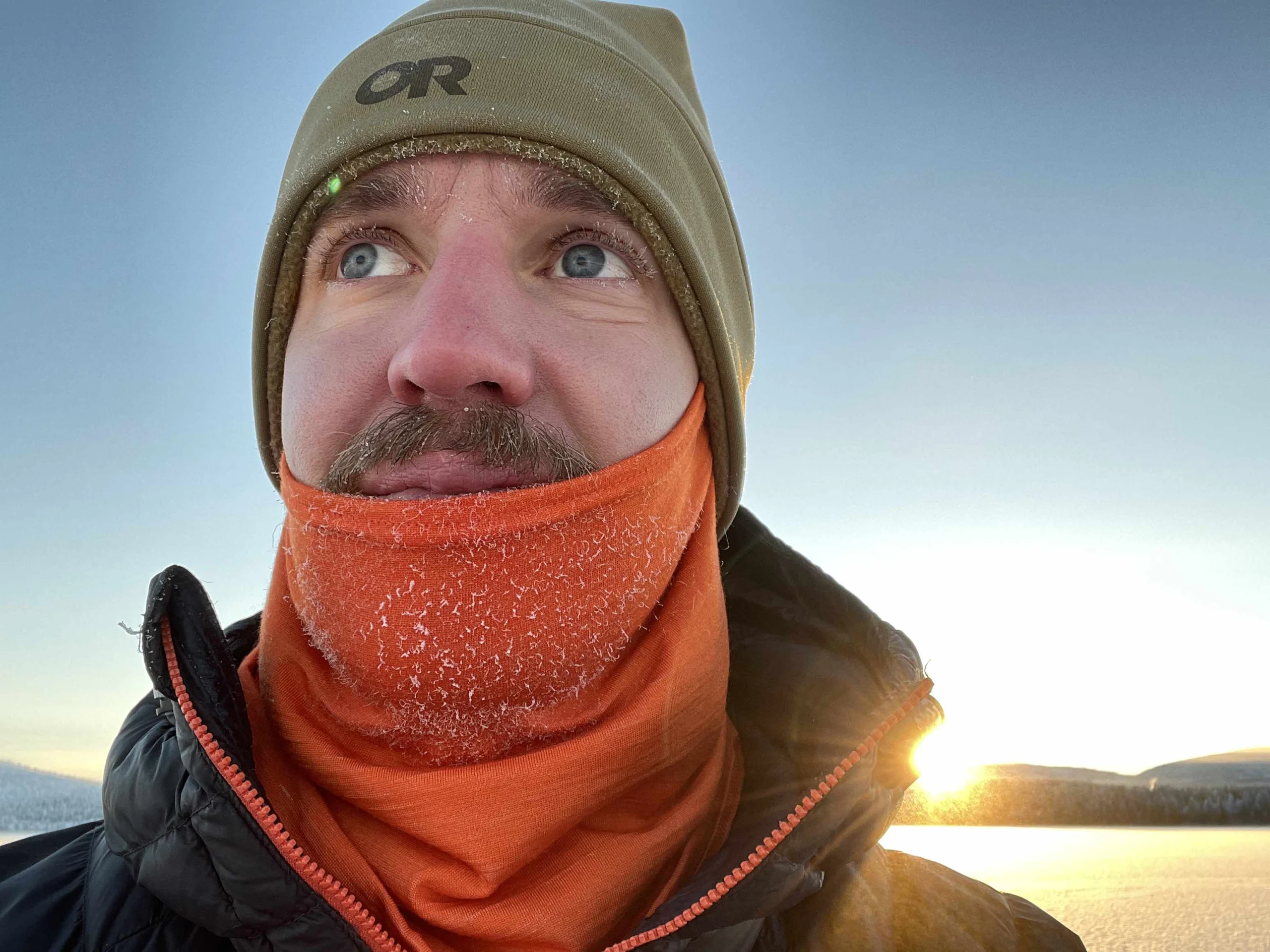
Warmth Under the Helmet
When wind picks up and the temperature drops below freezing, even a light workout calls for protection for the forehead and ears.
If the rest of your clothing is adequate, up to 80% of body heat in extreme cold can be lost through an unprotected head. This is because the blood vessels in the head cannot constrict in the same way as elsewhere in the body. The oxygen supply to the brain would be compromised. For this reason, the body prioritizes blood flow to the head even in severe hypothermia, long after circulation to fingers, toes, and other extremities has been reduced to minimize heat loss.
This is why protecting the head is critical. The saying “if your toes are cold, put on a hat” reflects this principle: preventing heat loss from the head helps keeping the entire body warm. A hat does not only protect the head it helps to maintain overall body temperature.
The most vulnerable areas of the head are the ears, which have a large surface area and relatively poor blood circulation. The same applies to the tip of the nose. Cheekbones and the chin are also prone to frostbite.
Even in temperatures below –30°C, windless conditions may not require separate facial protection. But in wind, the cheeks and nose quickly need coverage. Then the moisture from breathing becomes a challenge.
Managing moisture
If the face is fully covered, moisture condenses into the fabric and soon the result is a damp cloth against the skin. To prevent this, a balaclava should have openings at least for the nose and preferably also for the mouth.
Many balaclavas perform well with an open nose section, but many have only small holes for a mouth opening, which leads to moisture still accumulating inside. Partly due to windproof membrane.
Fortunately, many fabrics such as merino wool and synthetic fibers remain reasonably comfortable when wet. Most moisture migrates to the outer surface, where it either evaporates or freezes depending on conditions. Drying time depends heavily on material choice.
Hats and hoods are too thin to provide sufficient protection alone in cold conditions. A thin helmet liner combined with a separate hat is often more versatile than a single thick balaclava.
Matching the helmet
Helmet-compatible headwear is especially important in high-speed activities such as snowmobiling but also in windy conditions which often apply in open areas and higher elevation. Speed creates wind chill, significantly increasing perceived cold. Wind resistance is therefore essential. However, the more windproof the material, the less breathable it becomes. In downhill skiing this is usually acceptable, but in cycling – where climbs alternate with descents – sweat buildup can become an issue, leaving the hat damp and uncomfortable.
Different helmets behave differently with underlayers. Lightweight climbing or construction helmets feel different with a hat compared to heavy, fully enclosing snowmobile helmets. Flat seams improve compatibility. Thick seams can also work if they align properly with helmet padding.
Ski helmets often include built-in ear protection, reducing the importance of windproof hats underneath. Thus, requirements vary significantly by activity.
Helmet straps also affect fit. If a balaclava is too short, tightening the strap can pull it upward, exposing the neck.
From balaclavas to neck gaiters
Some helmet hoods are designed with overlapping sections for the hat and neck area, improving fit and ear protection compared to simple cutout designs.
Traditional three-hole balaclavas are no longer fashionable for actual outdoor use. They are often made from thick but non-windproof material, making them too warm and poorly suited for higher activity level work. Their advantage is face protection while leaving an opening for breath vapor.
Since the early 2000s, synthetic tube scarves have become a standard outdoor accessory. They can be worn around the neck or adapted under a helmet as a hat or face covering.
Different users have different needs: some prioritize face protection, others neck warmth, others wind protection.